How to organize a family board game night for mixed ages
· Editorial team seattlenewsdaily24.com
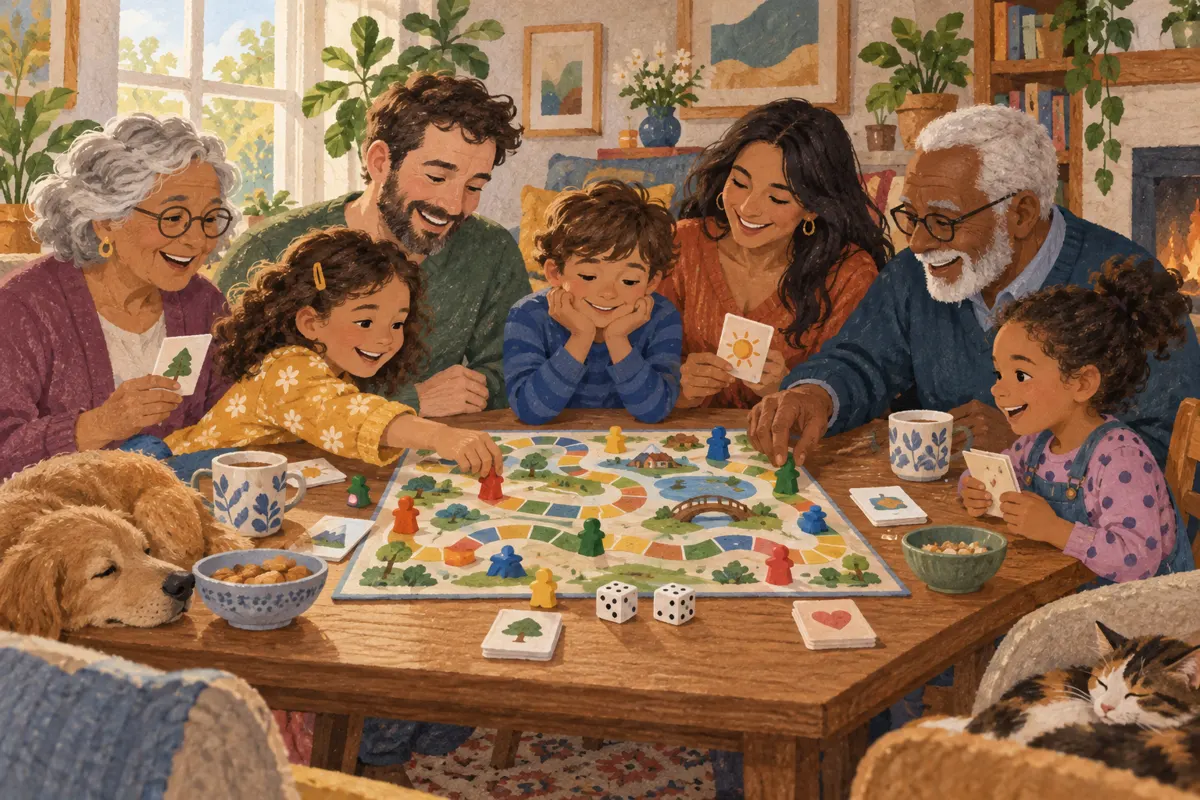
Start with a short game everyone can follow, pair players who need help with willing partners, and take turns choosing what to play next. For mixed ages, the best starting point is what each person can comfortably do: read cards, recognize pictures, handle pieces and wait between turns. The proposed plan below gives everyone a meaningful role without making the evening complicated.
Choose games for the people at your table
Check the suggested age, player count and playing time, then look at the actual tasks. A child who enjoys counting may manage number choices but need help reading. An adult may prefer a slower game over one that rewards quick reactions. Consider interests as well as ability so older players have something to enjoy.
- Can everyone understand the goal after a brief demonstration?
- Can someone participate without reading independently?
- Are the pictures, symbols and pieces easy for everyone to see and use?
- Does the game keep everyone involved until the end?
- Will a complete round fit comfortably into your available time?
Set out two or three suitable options from games you already own. Include different activities, such as matching pictures, building or making simple choices. Cooperative play is another option, but check the rules carefully: sharing a goal does not automatically make a game simple.
Set up a comfortable, manageable evening
Proposed setup: agree on a stopping time before opening a box, with room for a break. Start while younger children still have energy. Clear enough table space for everyone to reach the playing area, arrange comfortable seats, and place drinks away from cards. Ask whether anyone needs brighter light or help handling small pieces.
Prepare the first game before people sit down. Separate the pieces, find the starting setup and keep the rulebook nearby. Agree that phones can stay aside during play, while allowing anyone who needs to remain reachable to do so. Leave a backup activity ready in case the first choice does not suit the group.
Form teams that give everyone a real turn
Proposed approach: offer partnerships when reading, planning or handling pieces would otherwise leave someone out. Check whether the game supports teams; if you adapt individual play, agree on that change before starting. Ask who wants a partner instead of automatically pairing every child with an adult.
- Let one partner read a card while the other chooses the action.
- Offer a small number of legal choices when a player asks for help.
- Ask before giving advice or moving someone else's piece.
- Switch responsibilities between rounds so the same person does not control every decision.
For a cooperative game, a proposed table rule is that the active player hears suggestions and makes the final choice. That gives experienced players a way to help while preserving everyone's opportunity to participate.
Explain the rules through one practice turn
Proposed teaching method: have one person learn the rules beforehand and explain them in the order players will use them. Keep the pieces visible during the explanation and demonstrate actions as you describe them.
- State the goal in one sentence, including how the game ends.
- Show what a player does on a normal turn.
- Demonstrate any symbols, scoring or choices needed to begin.
- Play a practice turn together and invite questions.
- Agree whether to restart or continue once everyone understands.
Decide in advance how to handle early mistakes. For example, propose allowing a mistaken move to be corrected during the learning round. Apply the same agreement to everyone. If a rule is unclear, check it together and settle the question before continuing.
Rotate choices and finish at a good moment
Proposed rotation: write down a chooser order and let each person select from the suitable games you prepared. If there is time for only two choices, give the remaining people first pick next time. Rotate who starts each game when its rules allow.
Between games, ask whether people want another round, a different activity or a break. If someone is frustrated, acknowledge it and offer a pause without requiring a rematch. Avoid starting another game too close to the agreed finish. End by letting everyone name one game they would play again, then share the cleanup.