How to pack for a rainy weekend with just one backpack
· Editorial team seattlenewsdaily24.com
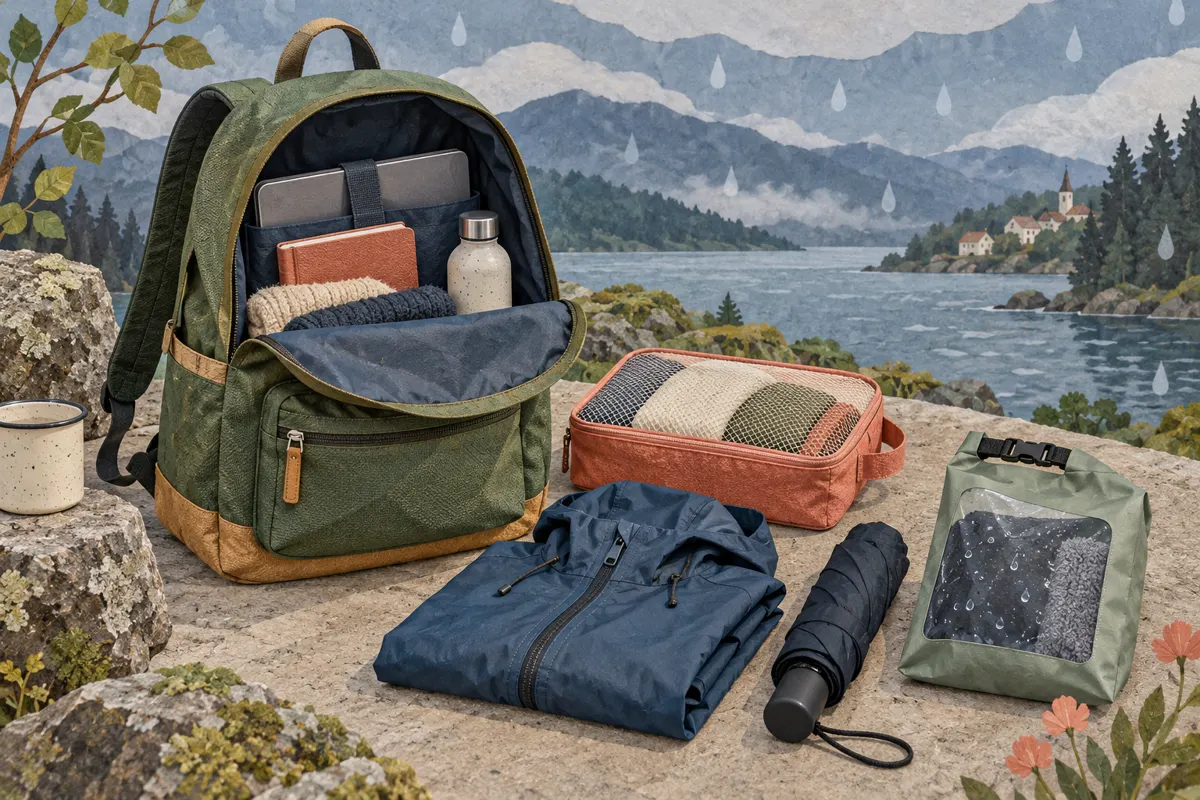
For a rainy weekend, wear your bulkiest clothes and walking shoes, pack a small set of interchangeable layers, and give wet gear its own sealed pouch. Keep your rain jacket within reach and protect spare clothes, electronics, and documents inside the backpack. The proposed two-night packing plan below suits a trip that combines public transit, outdoor walks, and indoor stops.
Start with the clothes you will wear
Build the weekend around one travel outfit: comfortable walking shoes, quick-drying pants, a shirt, and a light warm layer. Add a hooded rain shell when needed. Wearing the largest pieces frees space inside your backpack without requiring a separate outfit for every activity.
Choose clothes that work together and feel appropriate for both walking and casual indoor stops. A clean spare top can handle an evening change. Favor quick-drying fabrics over heavy denim or thick cotton, which can stay damp longer. Adjust the warm layer to the destination and forecast; a rainy weekend does not always mean cold weather.
Use a compact two-night checklist
This checklist is an editorial proposal for two nights away, in addition to the outfit you wear. Adapt underwear, medication, and personal-care quantities to your needs. Lay everything out before packing so duplicate items are easy to spot.
- Two spare tops and one lightweight spare bottom.
- Two changes of underwear, two pairs of socks, and one extra pair of socks for a soaking.
- One compact sleep outfit.
- One light warm layer and one hooded rain shell, if you are not wearing them.
- A compact umbrella, if you expect to use it during station waits or short city walks.
- Small quantities of toiletries in a separate leak-resistant pouch, plus personal medications.
- Phone, charging cable, and a compact power bank if needed.
- Identification, payment cards, and necessary travel documents.
- One protective bag for dry essentials and one sealable wet pouch.
A second pair of shoes is optional. Include one only if your plans require it or you need a dry backup; choose a compact pair and bag it separately. Leave out extra outfits that have no specific use, and confirm what toiletries your accommodation supplies before relying on them.
Give wet gear a separate place
A water-resistant backpack benefits from additional protection around its contents. Put spare clothing in a dry bag or suitable waterproof liner, and keep electronics and paper documents in their own protective pouches. Reserve a separate sealable bag for damp socks, a wet umbrella, or a rain shell.
- Pack clean clothing together inside its protective bag.
- Place the empty wet pouch near the top so you can reach it without unpacking.
- Before entering a bus or indoor stop, shake excess water off your umbrella or shell where appropriate.
- Contain damp gear separately before putting it beside dry belongings.
- At your accommodation, remove wet items from the pouch and spread them out to dry.
Treat the wet pouch as temporary containment. As an editorial suggestion, leave enough space for it when full: a tightly stuffed backpack makes it harder to put away a damp jacket during a hurried transfer.
Pack for station waits and indoor stops
Keep the rain shell and umbrella at the top or in accessible pockets. Put your transit card and phone somewhere secure that you can reach without exposing the main compartment to rain. Exterior pockets are better suited to items that tolerate moisture or have their own protection.
Group clothing in one packing cube or pouch, toiletries in another, and cables together. Avoid placing a wet umbrella beside chargers or documents. Save maps and booking details offline before leaving, so you can check your route during a connection without depending on a signal.
Check the packed bag before leaving
Use this proposed final check before departure. The backpack should close comfortably, and you should be able to retrieve rain protection without spreading your belongings across a station bench.
- Put on the loaded backpack and walk around; adjust the straps and remove unnecessary items if it feels awkward.
- Practice taking out the rain shell while keeping the clothing compartment closed.
- Check that dry socks and electronics are protected and the wet pouch is accessible.
- Review the forecast and transport alerts, then adjust layers and allow time for rainy transfers.