How to practice disc golf putting in a small outdoor space
· Editorial team seattlenewsdaily24.com
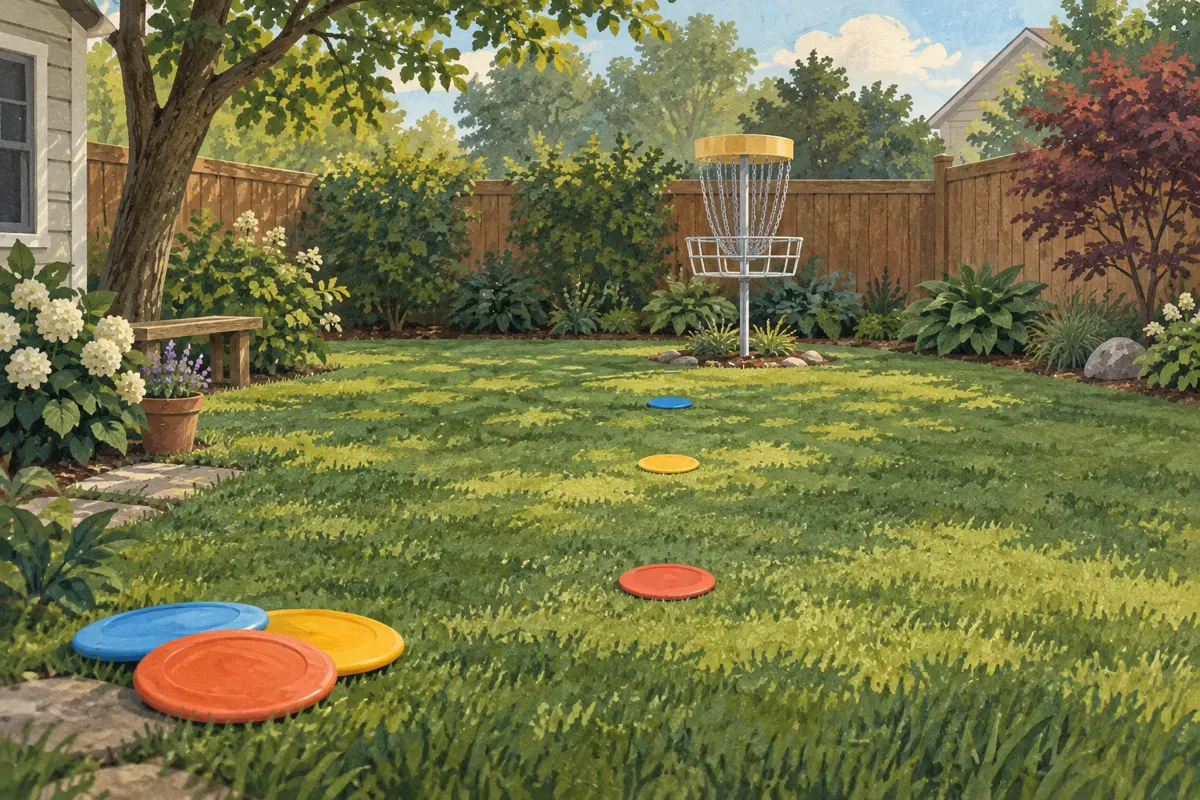
Practice disc golf putting in a small outdoor space by setting up a stable basket, marking a few short throwing distances, and repeating putts you can make consistently. Start around 5–10 feet away and move back only while your throws stay controlled. A clear lane and a repeatable routine matter more than fitting long putts into a cramped yard.
Set up a clear putting lane
Choose a level outdoor area where you can stand comfortably, throw toward the target, and retrieve discs without crossing a busy path. Before placing the basket, consider where a missed putt could travel. Leave room behind and beside the target; the distance between your feet and the basket is only part of the space you need.
- Point the throwing lane away from people, pets, windows, vehicles, and neighboring property.
- Place a portable basket on firm ground and check that it stands securely.
- Remove loose objects from your stance and walking route.
- Mark throwing spots with flat markers that will not become tripping hazards.
- Pause whenever someone enters the throwing or retrieval area.
If your yard has only one usable lane, keep every drill within it. You do not need to throw from all sides of the basket. If even short misses could leave the clear area, choose another location.
Choose a target and keep equipment simple
A disc golf basket lets you practice both aiming and completing the putt. Use the putter you normally play with. One disc is enough to begin; a few putters let you take several attempts before collecting them. Keep track of each attempt instead of throwing the whole stack as quickly as possible.
Without a basket, you can still practice accuracy toward a safe target. A towel or marked circle on the ground can serve as a landing target, as suggested by Divergent Discs. That gives you a way to practice direction and touch, but it does not show whether a putt would catch in a basket. Record target hits separately from basket makes.
Start close and repeat your routine
Begin at a distance where making the putt feels manageable. Green Splatter recommends starting with 10 attempts from 10 feet and emphasizing successful short putts. If that distance is uncomfortable or your space is smaller, start closer. There is no need to reach 20 or 30 feet during every session.
- Stand at your closest marker and settle into a comfortable stance.
- Choose a specific aiming point on the target.
- Use the same preparation before each throw, then release smoothly.
- Count makes and attempts, and collect your discs after the small set.
- Move closer if repeated misses make you strain or rush.
Work on one thing at a time, such as your aiming point or preparation. Changing your stance, grip, and release together makes it harder to understand what affected the next throw.
Use two drills that fit your space
The solo ladder from DG PuttHeads works well in a short lane: begin 5 feet from the basket, move 1 foot farther away after a make, and move 1 foot closer after a miss. Set a maximum distance that fits your clear area. Once you reach that marker, stay there after makes rather than backing into an unsafe position.
For variety, try this proposed compact version of an around-the-world drill. It adapts the sources’ multi-position games to the room available:
- Mark three safe positions at a comfortable distance, using slightly different angles if space allows.
- Throw one putt from each position and award one point per make.
- Complete three rounds for nine attempts.
- Repeat the same layout next session so the scores are comparable.
In a narrow space, use three distances along the same lane instead of three angles. Keep the challenge within the available room.
Keep sessions short and track comparable attempts
A proposed 10-minute session is simple: spend two minutes on comfortable close putts, five minutes on one drill, and three minutes repeating a fixed set from your usual marker. Finish without forcing extra distance. This structure follows the sources’ emphasis on short, repeatable practice and manageable putts.
Write down the distance, makes, and total attempts for that final set. Add a brief note if wind affected the throws. Compare sessions using the same target and marker, and treat a single score as one observation. When your routine stays comfortable and results become more consistent, add a little distance if the space allows.