How to roast vegetables with different cooking times on one sheet pan
· Editorial team seattlenewsdaily24.com
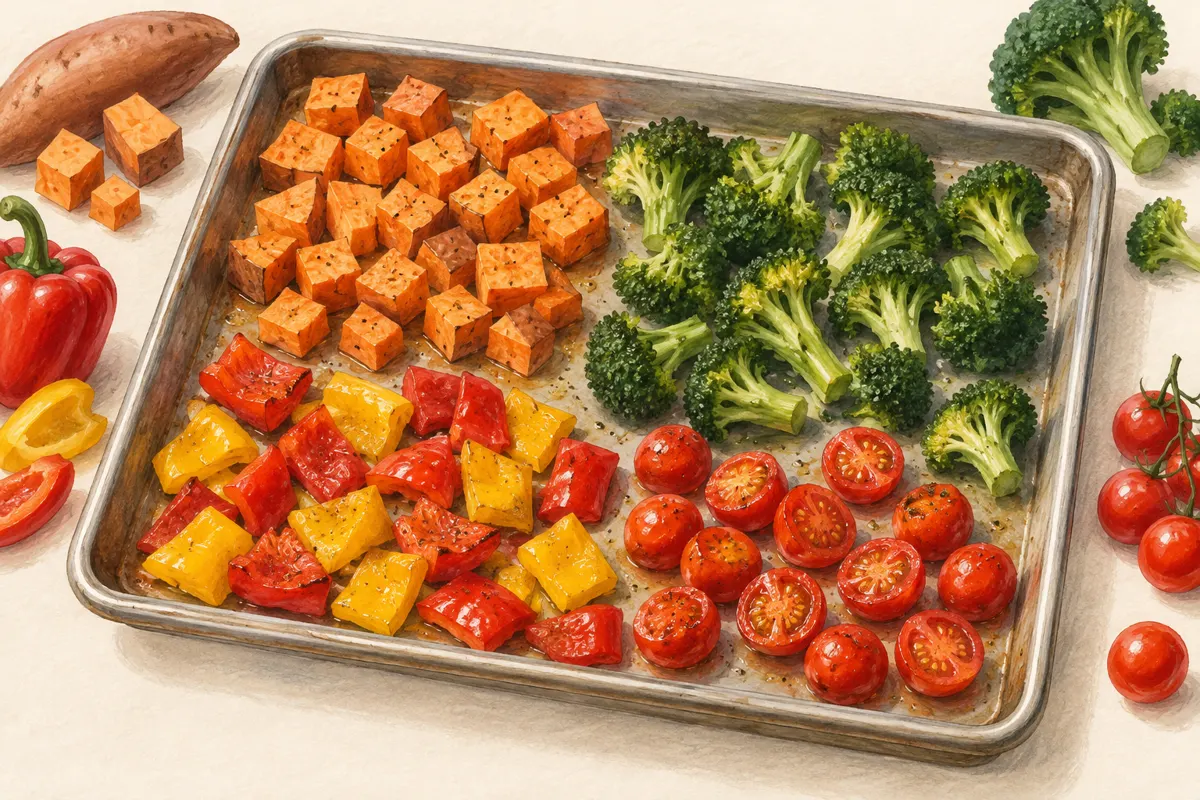
To roast vegetables with different cooking times on one sheet pan, cut firm vegetables smaller, give them a head start, and add softer vegetables later. Keep everything in a single, uncrowded layer, then check each type for tenderness before serving. The goal is to coordinate the finish, rather than put every ingredient into the oven at once.
Group vegetables before you start
Choose your mix, then sort it by how much cooking it needs. Dense roots and winter squash usually need more time than soft summer squash or tomatoes. Size matters too: a thick carrot chunk and a thin carrot slice should not be treated as equivalent pieces.
- Give a head start to firm vegetables such as potatoes, sweet potatoes, carrots, parsnips, and butternut squash.
- Assess broccoli, cauliflower, Brussels sprouts, peppers, and onion according to their size. These can join the next stage, or cook alongside smaller root pieces.
- Hold softer ingredients such as zucchini and cherry tomatoes for a later addition when your mix includes slower-cooking vegetables.
These groups are a planning guide, not a fixed timetable. Start with a manageable combination of three or four vegetables so you can check and move each type easily.
Use the cuts to narrow the timing gap
Cut firm vegetables smaller when they will share a pan with softer ones. Keep pieces of the same vegetable reasonably consistent so one batch does not contain both hard centers and overcooked edges. Leave softer vegetables in larger chunks if you want them to retain some shape.
A proposed starting combination is small sweet potato cubes, medium broccoli florets, chunky bell pepper pieces, and whole cherry tomatoes. Prepare each group separately so you can add it when needed. If you prefer large potato wedges or substantial squash chunks, plan a longer head start instead of expecting the other vegetables to wait in the oven.
Prepare a pan with room for every stage
Use a large rimmed sheet pan and roast uncovered. Toss each batch with enough olive oil to give it a thin coating, then season with salt and pepper. Spread the vegetables in one layer with space between pieces; crowded or stacked vegetables can become soft without roasting well.
Leave enough space for the ingredients you will add later. Separate areas for each vegetable make it easier to turn pieces, check tenderness, and remove one group early. If the complete mix cannot fit in one layer, reduce the quantity for this batch. Staged additions cannot compensate for an overloaded pan.
Add vegetables in stages
For an approachable starting temperature, the Good Food mixed-vegetable recipe uses 400°F, approximately 200°C, or 180°C in a fan oven. Use the following proposed sequence as a flexible method, checking progress at each addition rather than treating it as a guaranteed schedule.
- Preheat the oven. Oil and season the firm vegetables, spread them on the pan, and begin roasting.
- Check the roots before adding the next group. They should have begun to soften but still need more cooking. Turn them, then add the prepared broccoli, peppers, or other middle-stage vegetables.
- When the earlier vegetables are approaching tenderness, add the softer ingredients. Coat and season these before spreading them into the available space.
- Turn or gently stir the vegetables during cooking, keeping them in a single layer. Check individual pieces again as they approach your preferred texture.
For a mix with smaller timing differences, two stages may be enough. Two Healthy Kitchens adds tomatoes after an initial 15 minutes, then roasts the mixture for about another 15 minutes. That is an example for its particular vegetable mix, not a universal timing rule.
Check doneness and adjust the finish
Test the largest root pieces with a fork: check their centers, not just their browned surfaces. Softer vegetables should be tender without becoming mushy, while tomatoes can be softened and beginning to burst. Different vegetables can retain different textures and still be ready to serve together.
If one group finishes first, transfer it to a serving dish and let the rest continue. If roots are still firm, delay the remaining soft vegetables. For the next batch, cut those roots smaller or start them earlier. Keep a note of the combination and cuts you used; that gives you a practical starting point when you make the same mix again.